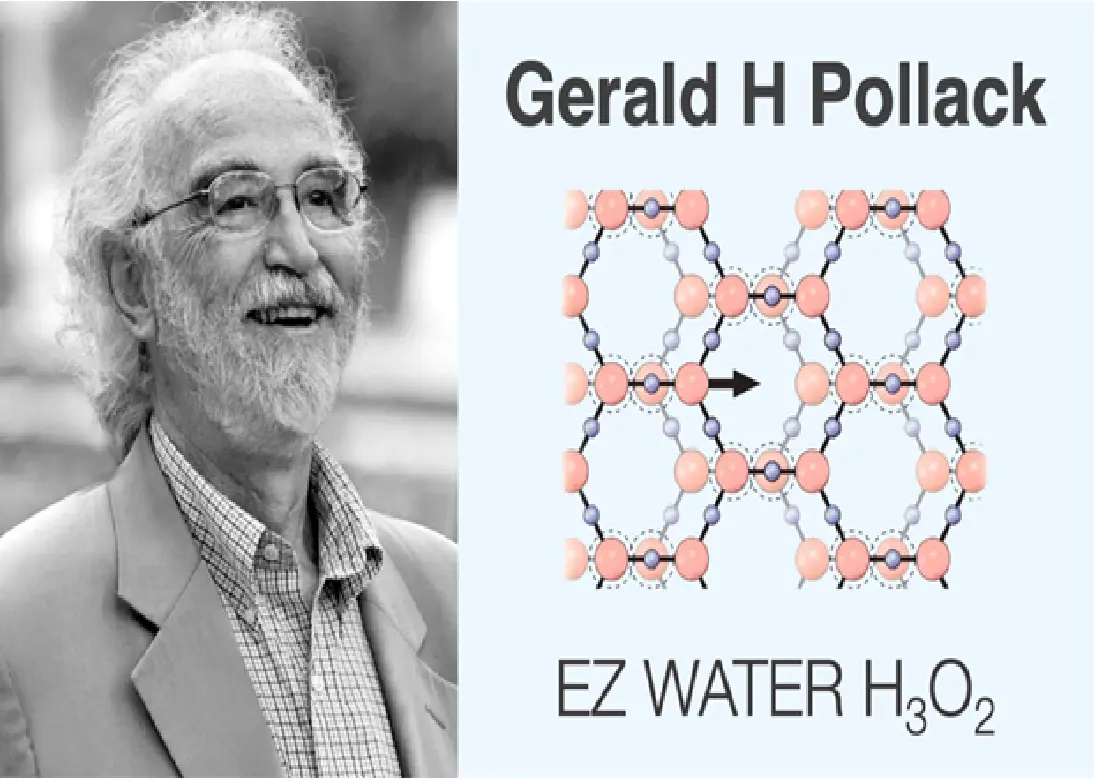
Dr. Gerald Pollack believes:
The essence of life is not just biochemical reactions, but a self-organizing system driven by structured water, protein gels, charge separation, bioelectricity, and light energy.
in its theory:
Cells are not bags filled with liquid
Rather:
Cell = Gel + Structured Water (EZ Water) + Charge Separation System + Energy Conversion System
Level 1: The cell is a biological gel
"Cells, Gels and the Engines of Life" states:
The inside of a cell is not a freely flowing liquid.
Mainly by:
- Cytoskeletal protein
- Collagen
- Microtubule
- Microfilaments
- Intermediate filaments
Form a three-dimensional network.
These hydrophilic proteins adsorb a large number of water molecules on their surface.
Formation
Protein
↓
Structured water
↓
Gel network
Therefore:
Cells are essentially charged and highly ordered biological gels.
Layer 2: Water Exists in a Fourth Phase (EZ Water)
"The Fourth Phase of Water" proposes:
Besides:
- Solid
- Liquid
- Gas
apart from that
Water still exists.
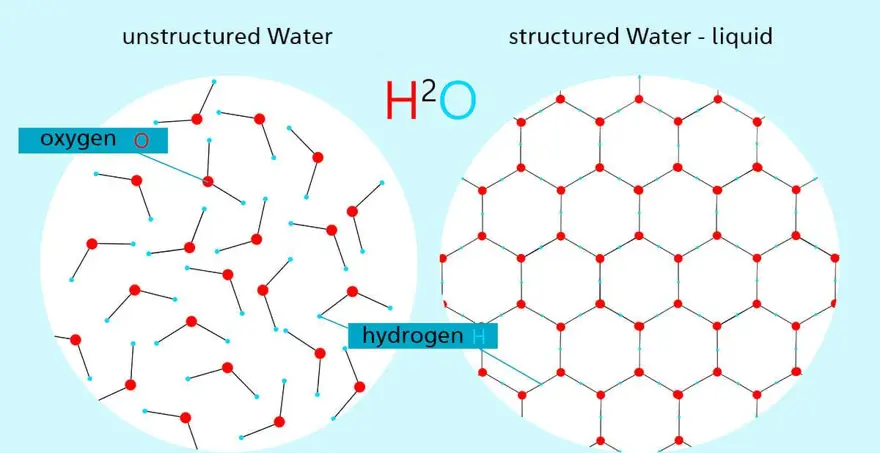
Phase Four Water
Exclusion Zone Water
Features
- near a hydrophilic surface
- Exhibiting liquid crystal structure
- Molecules are highly ordered.
- Reject most solutes
Therefore, it is called:
Exclusion Zone (EZ)
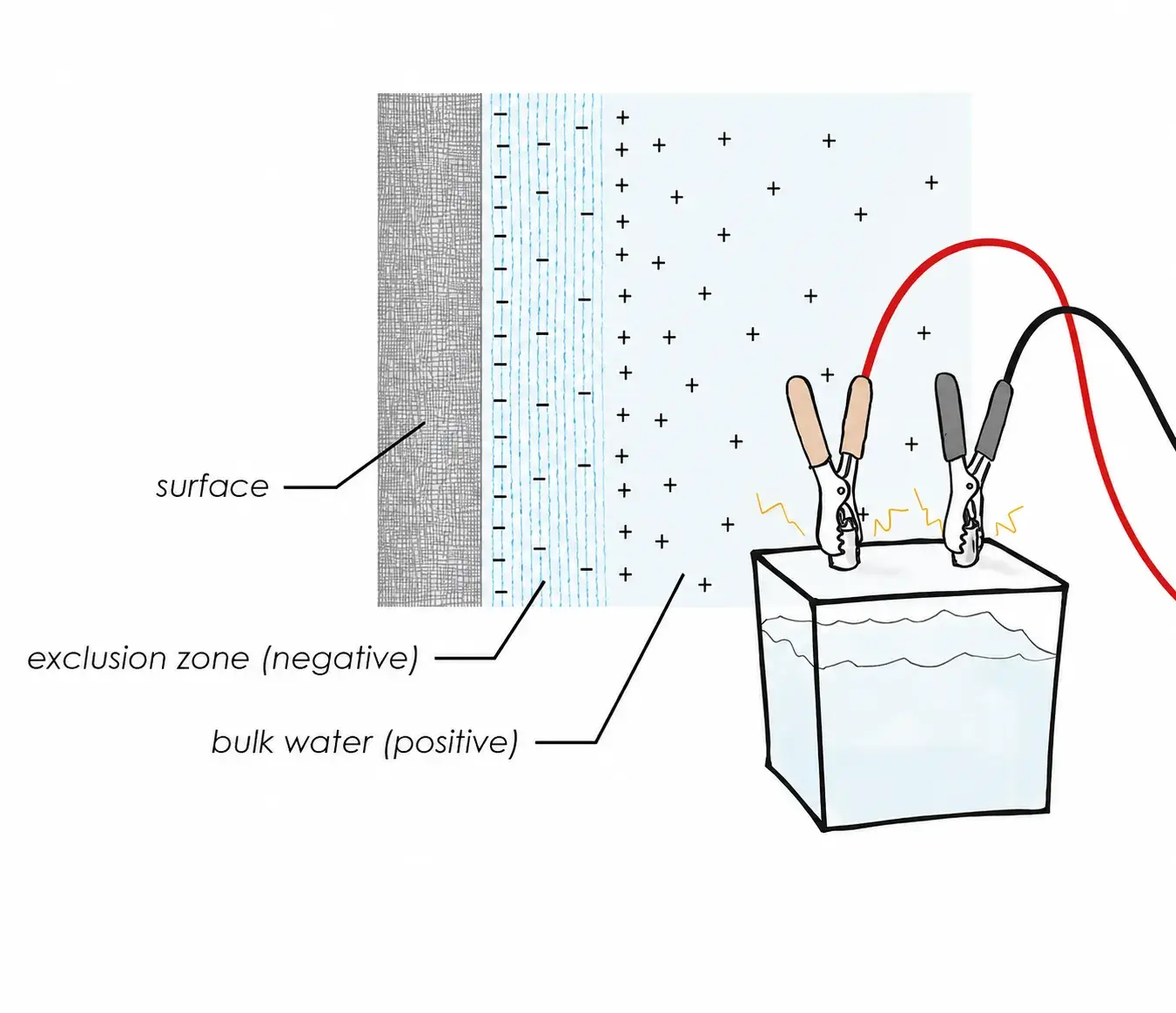
EZ WaterElectrical characteristics
After forming the EZ:
EZ Zone:
- Negatively charged
Surrounding liquid water:
- Rich in hydrogen ions (H⁺)
- Positively charged
This results in:
Negative charge region
↔
Positive charge region
Generate:
- Potential difference
- Electric field
- Electric current
Similar:
miniature biological battery.
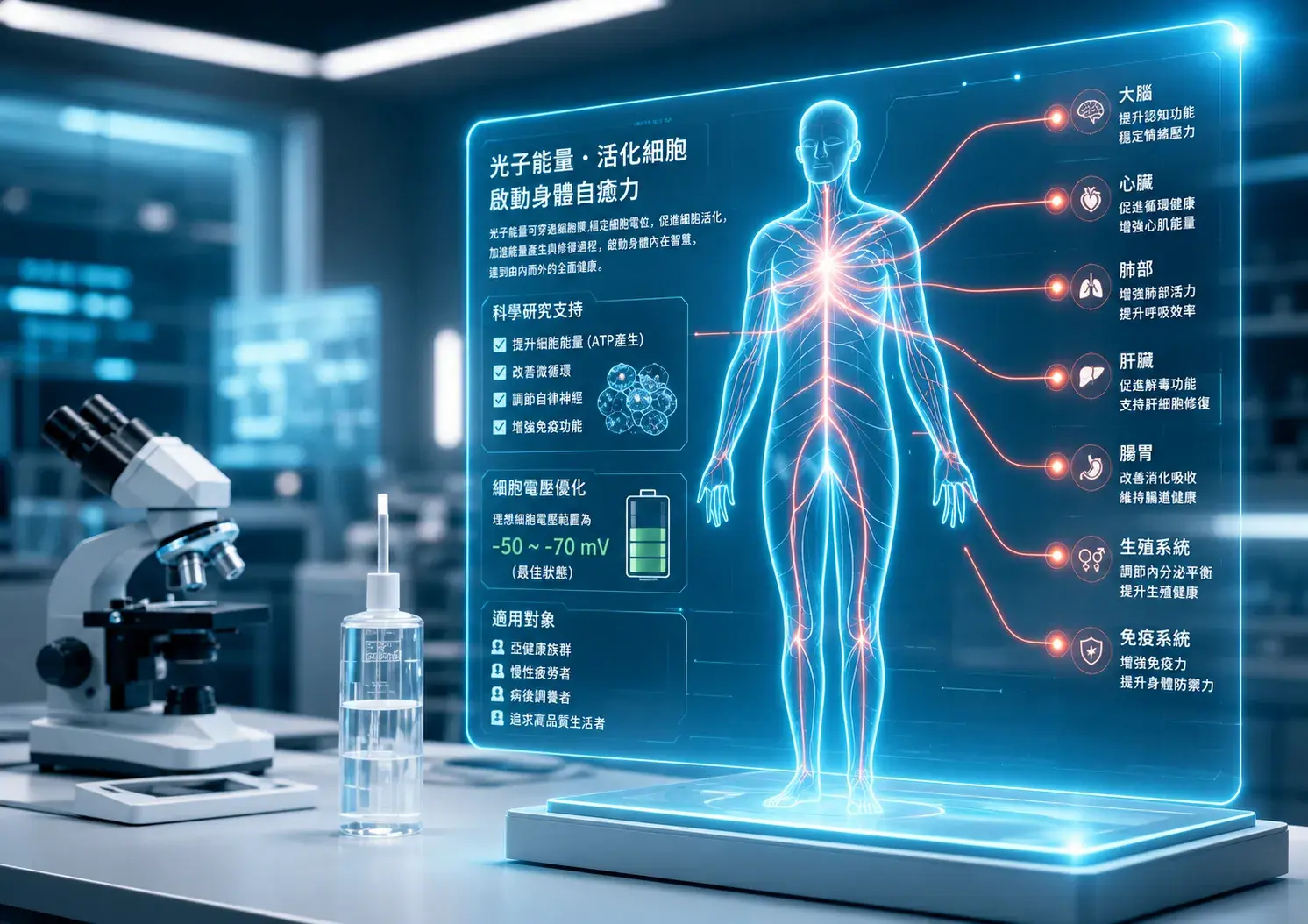
Layer Three: Photonic Drive for Life Energy Generation
Dr. Gerald Pollack discovered:
Light can promote EZ formation.
For example:
- Sunlight
- Far infrared
- Human body heat radiation
They can all provide energy.
Formation
Light energy
↓
EZ increase
↓
Charge separation increased
↓
Potential increase
Therefore, it is proposed:
Light energy can be converted into biologically available electrical energy by water.
Fourth Level: Cell Potential is the Basis of Life's Operations
Pollack believes:
Charge separation generated after EZ formation,
Probably:
- Cell membrane potential
- Tissue potential
- Bioelectrical signals
one of the important sources.
Theoretical Framework
Light energy
↓
EZ Water
↓
Charge separation
↓
Bioelectricity
↓
Cell function
Forms the basis of life's activities.
Layer 5: Structural Water Drives Cellular Function
Abundant structured water within cells can affect:
1. Protein folding
Maintain protein function
2. Enzyme activity
Improve response efficiency.
3. Material transport
Assistance
- Ion migration
- Electron transport
- Information transmission
4. Cell mechanics
Maintenance
- Elastic
- Tension
- Form
Sixth Layer: The Cytoskeleton is a High-Speed Information Highway
Dr. Gerald Pollack proposed:
The cytoskeleton is more than just a scaffold.
More likely:
- Signal path
- Mechanotransduction pathway
Therefore, message passing does not have to rely completely on:
- Hormone
- Neurotransmitter
- Molecular diffusion
And can go through:
Protein network
+
Structured water network
Fast delivery.
Layer 7: Life is an electro-aqueous (water–electric) coupling system
After integrating the theory:
How life works:
Ambient light energy
↓
Hydrophilic protein
↓
EZ Water Formation
↓
Charge separation
↓
Bioelectricity generation
↓
Cytoskeletal conduction
↓
Mitochondria and Regulation of Cell Function
↓
Tissue repair and life activities
Dr. Gerald Pollack Life Model Summary
Traditional model
Glucose
ATP
→ Cellular work
Dr. Gerald Pollack Model
Light energy + water
↓
EZ Water
↓
Charge separation
↓
Bioelectricity generation
↓
ATP Production and Cell Function
↓
Life works
Core Principle Summary
Dr. Gerald Pollack believes that cells are biological gel systems composed of hydrophilic proteins and structured water. When light energy acts on the water within cells, it can form negatively charged EZ water and generate charge separation, thereby creating a biological electric field. This energy conversion mechanism of "light → water → electricity," combined with the cytoskeleton and gel network, collectively drives cellular energy supply, information transmission, tissue repair, and life activities.